Live Music Recording
Roles: Sound Recordist/Mixer
Description:
For several years during my time in Wellington New Zealand, I worked along side various NZ orchestras, recording and filming their concerts. I would then edit, mix, master the audio, and create small videos of the performance.
These recordings varied in size and complexity. A lot of the time I was constrained by budget and gear, focusing on more of a ‘concert capture’ approach where I’d have a simple one to four mic array providing a stereo recording of the entire show, often with a spot mic or two for any solo instruments. On the occasion however, I did have recordings that that delved a little deeper, where each instrument was able to be mic and therefor, the control I had to play around post recording was much greater.
New Zealand Symphony Orchestra – Chook Symphony No.1
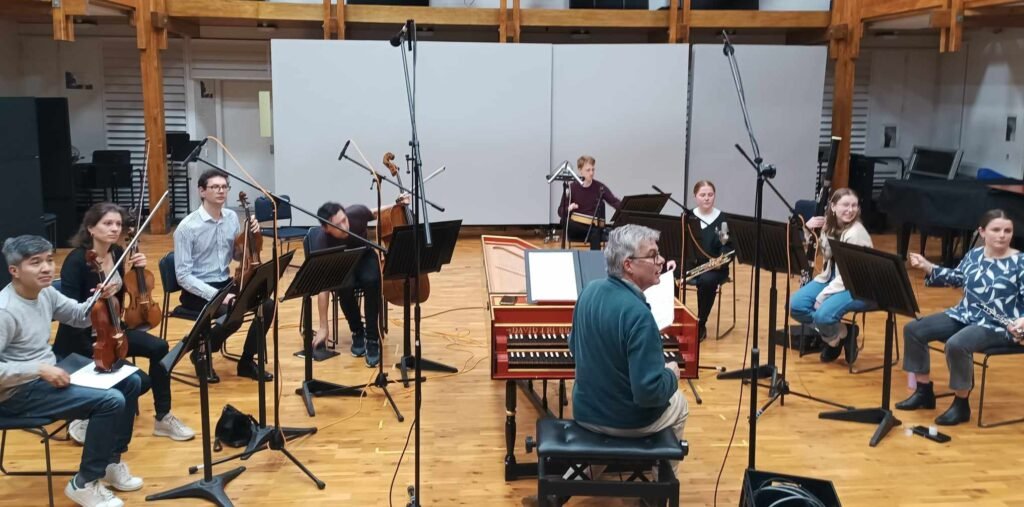
One of my highlights was working with the New Zealand Symphony Orchestra. After the orchestra was commissioned by the Bostock Brothers to compose and original score dedicated to the chickens on their farm, a small ensemble from the NZSO was selected, built around the harpsichord, (As well as the wind instruments playing only from their mouth pieces).
I then recorded the music at the University of Victoria, and the music video was film after. There was a small hiccup where the videographer didn’t play my recorded piece for them to mime to, leading to the tempo being off. Because of this I had to try and seamlessly re-edit my recorded piece to match this new tempo.
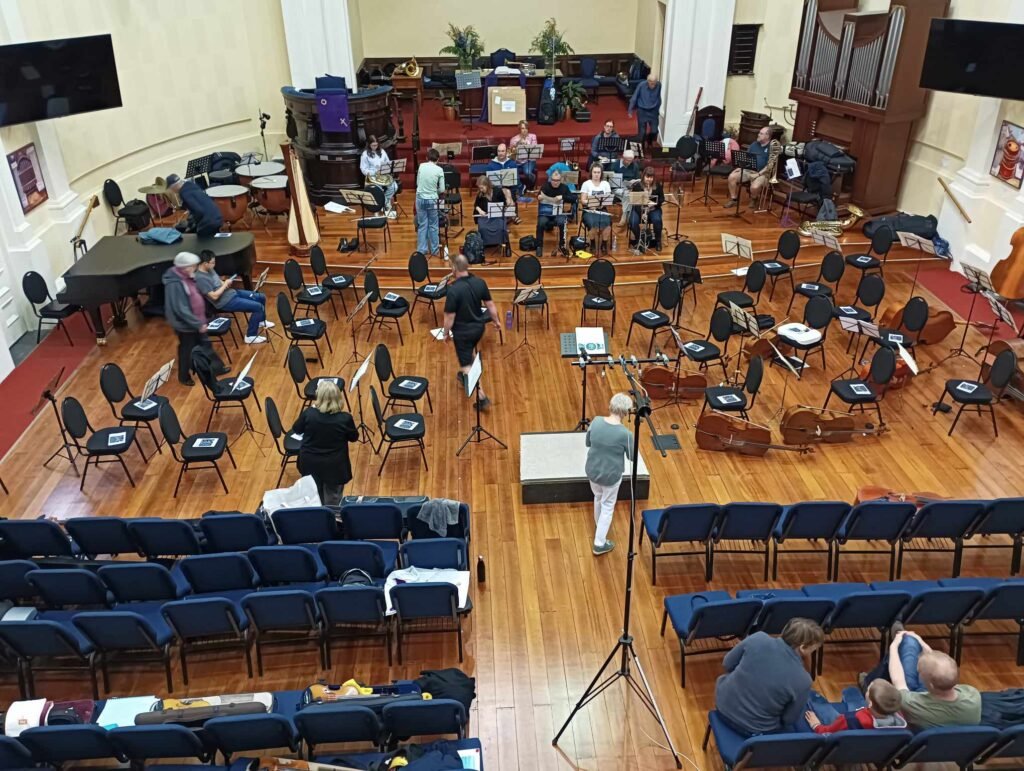
I also regularly recorded some of the local Orchestra around wellington. Namely the Wellington City Orchestra, and the Wellington Youth Orchestra. These tend to be on the simpler side for the recording. Budgets were often smaller, time far less forgiving, and usually the performances were done to a live audience that had to be taken into account. A huge emphasis was put on how to reduce the visual impact of the recording gear with strategic mic placement and cable hiding.
These shows often necessitated on the fly changes to mic set ups, if the sound wasn’t as expected, or a performer disliked having a mic so close.
However, I found it rather helpful for learning how to mic a variety of instruments. Over the course of several years I saw everything from flutes, acoustic guitars, harps, organs, vocals, and even accordion come through as solo instruments. More over, I gained a better sense of what needed mics and what didn’t, an acoustic guitar will be buried in an orchestra without one while a piano won’t. Some instruments like vocals and flute depend on the player so it’s usually safer to include a spot mic (The preference tends to always be for a spot mic as it allows more control later, to lift the soloist out of the crowd, however, this is resource dependant).